
What is an Assessment?
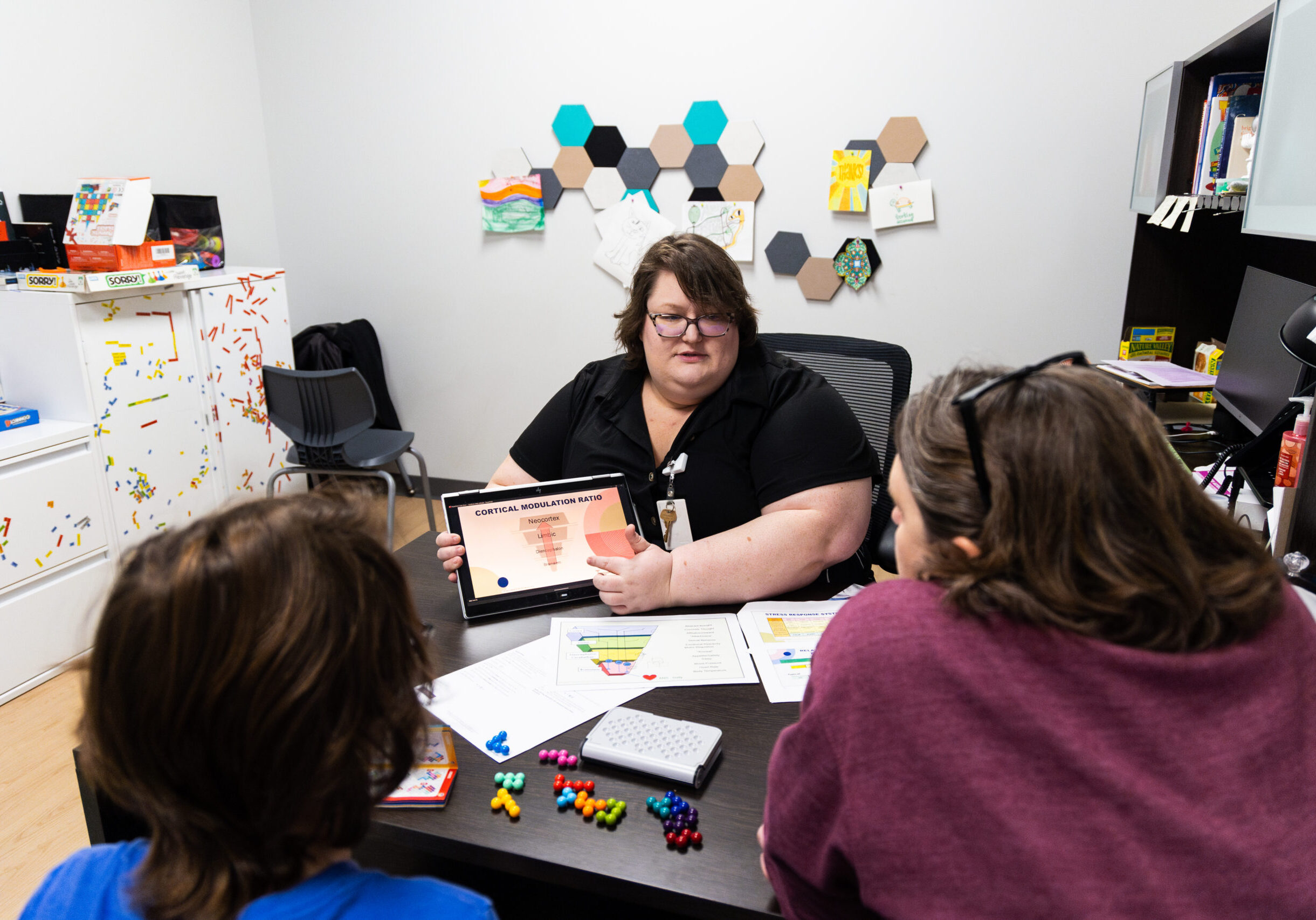
When a child is struggling with behavior, emotions, learning or relationships, caregivers may have questions that are difficult to answer: Why is this happening? What does my child need? How can I support them?
That’s where an assessment can help.
At FamilyForward, the Assessment Team provides trauma assessments and psychological evaluations designed to help families better understand a child’s experiences, strengths and needs. Using a trauma-informed approach, clinicians look beyond individual behaviors to understand what may be contributing to them and what support may be most helpful.
Looking at the Whole Child
Children may be referred for an assessment for many different reasons. A family may want to better understand their child, determine what services would be most appropriate, or seek clarification around a diagnosis. Therapists and teachers may also recommend an assessment when they are having difficulty understanding a child’s behavior or want another perspective.
But an assessment isn’t simply about identifying challenges.
“It is easy to focus on the problematic behaviors that a child has because those usually soak up the most energy and resources,” says Jamie Scaccia, Director of Assessment and Clinical Psychologist at FamilyForward. “However, we strive to see the child and family completely.”
That means looking at what is working, what is not working, the child’s strengths and skills, and the different perspectives that can help clinicians understand the full picture. The goal is to build on those strengths and find opportunities for success.
What Happens During an Assessment?
Every assessment looks a little different because each one is tailored to the child and family.
The process begins with a conversation between the caregiver and clinician about concerns, questions and the child’s history. From there, testing sessions are scheduled based on the child’s age and needs. Sessions may include answering questions, completing tasks and forms, participating in activities or even playing games.
Clinicians may also talk with other important people in the child’s life, such as a therapist or teacher, with appropriate permission. Once the information has been gathered, the clinician meets with caregivers and the treatment team to discuss the results and recommendations. Families receive an official report and can spend as much time as needed talking through the findings.
Understanding the Impact of Trauma
Trauma assessments focus on understanding how early traumatic experiences can affect a developing brain. For many families, this can help connect a child’s past experiences with the way they respond to stress or behave in everyday life.
“Our evaluations provide some clarity for families on why a child might be behaving the way that they are, how to support them, and how trauma plays a role in the picture,” Jamie says.
Psychological evaluations can also explore areas such as intellectual and academic performance, adaptive functioning, personality patterns and diagnoses. Clinicians develop each evaluation based on the specific needs and questions of the child and family.
A Process Centered on the Family
For some caregivers, the idea of an assessment can feel intimidating. They may worry about being judged or about what a clinician will think if they share what is really happening at home.
Jamie wants families to know that isn’t the purpose of the process.
“Our clinicians are human too,” she says. “They understand the stressors that caregivers are under and that everyone makes mistakes or remembers something that they wished they did differently.”
FamilyForward’s clinicians work to create an experience where families feel respected, comfortable and understood. Sessions can be adapted to the child’s needs, including incorporating movement, games or sensory activities. Youth can also participate in feedback conversations in ways that are appropriate for their age and developmental level.
Turning Understanding Into Action
An assessment is ultimately about what happens next.
Recommendations are developed around the specific needs and questions identified at the beginning of the process. They might include suggestions for services, ways to communicate with a child, strategies for routines at home or recommendations for supporting a child at school or in another environment.
The Assessment Team also works to make recommendations realistic and accessible for families, building on what is already working rather than relying on solutions that may be difficult to access. With permission, clinicians can collaborate with therapists, teachers and other service providers to discuss observations, results and next steps.
At its core, an assessment is about understanding.
Understanding what a child may be experiencing. Understanding their strengths. Understanding what their behaviors may be communicating. And, most importantly, understanding how the adults around them can provide the support they need.
As Jamie puts it, “We want their perspective to be a part of our evaluations.”